

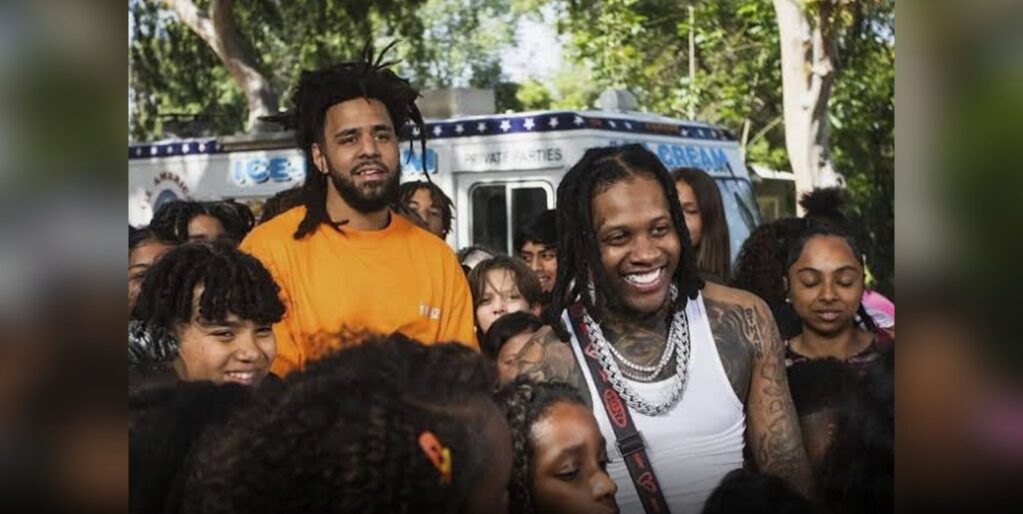
Lil Durk and J. Cole Deliver a Soul-Stirring Anthem
Okay, I have to be honest with you. I almost scrolled right past this one. Another Lil Durk single? Another superstar collaboration? My thumb was literally hovering over the skip button, ready to move on to something else. But then I saw the name J. Cole attached to it, and something stopped me. I’ve been burned before by pairings that sound great on paper but fizzle out in the booth. But man, am I glad I gave this a chance. This is not the track I expected, and it hit me in a way I wasn't prepared for.
First Impressions
My first listen to "All My Life" was a genuine whiplash moment. You hear that gentle piano melody, that soft, choir-backed intro, and you immediately know this isn't the drill-heavy banger you might be anticipating. It’s surprisingly tender. My initial thought was, "Is this really Lil Durk?" The vulnerability in his voice is raw. It’s not just him rapping; it feels like he’s actually talking to you, trying to process everything. And then J. Cole comes in. Let me tell you, Cole doesn't just rap; he reflects. He brings this grounded, wise energy that perfectly balances Durk's emotional delivery. I found myself sitting in silence when the track ended, just letting the weight of it all sink in. The first bar alone hooked me, but by the time the chorus came around with that children's choir, I was completely sold. This is a record with a soul.

Who Is Lil Durk featuring J. Cole
To truly get this record, you need the context. Lil Durk is more than just a rapper from Chicago; he is a survivor. Born Durk Derrick Banks, he came up in the Englewood neighborhood, a place where the odds were stacked against him from day one. He started as a voice of the streets with his Only the Family (OTF) collective, grinding through mixtapes like Signed to the Streets before breaking through to the mainstream. He went from drill music’s underground to dominating the Billboard charts. But his story is full of loss and pain, stuff that would break most people. He turned that pain into art, blending raw street lyricism with these melodic, emotional vocals that have basically shaped the sound of modern rap.
Then you have J. Cole. He’s the thinker, the lyricist from Fayetteville who built his entire empire on introspection and real talk. I’ve followed him since The Warm Up; his ability to balance celebrity with social commentary is unmatched. Seeing these two come together is not just a passing of the torch; it’s a meeting of two generations of hip-hop royalty. Durk represents the new wave of melodic pain, while Cole is the anchor of lyrical substance. Pairing the two isn't just smart marketing; it’s a perfect storm of contrasting yet complementary skills. They aren't just collaborators; they are two titans speaking the same language of struggle and triumph.
Breaking Down "All My Life"
So, what makes this track work so well? For starters, that beat. Produced by Dr. Luke, it’s sparse and clean. There’s no heavy bass trying to knock your speakers out. Instead, you get this ivory-tickling melody that feels hopeful and melancholic at the same time. It gives Durk the space to be honest. When he delivers lines about people trying to keep him down and wondering if he would make it out, you don’t hear bravado; you hear a man letting his guard down. The use of the choir on the hook is genius. It turns the song from a personal diary entry into a communal anthem. It feels like a congregation lifting him up, and by extension, lifting you up.
And just when you think the song has peaked, J. Cole steps in. His verse is a masterclass in precision. He sidesteps the usual "look at my wealth" trope and instead focuses on commentary. He talks about the realities of the industry and the heavy burden of being a voice for communities that are hurting. The production is flawless and the video, directed by Steve Cannon, pushes it over the edge. It’s cinematic, showing Durk in a light we don't often see, as a community leader and beacon of hope. It’s not just a song; it’s a visual memoir showing the contrast between his past struggles and his present reality. This Grammy-winning record earned every piece of its success. The way it climbed the charts and snagged the Best Melodic Rap Performance award at the 66th Grammys is proof that this resonated on a global level.
My Verdict
I’ll be straight with you: this is more than just a hit song. This is a milestone. "All My Life" is a testament to resilience. It’s the kind of record that can pull you out of a dark place or make you appreciate how far you’ve come. It doesn't have the aggressive edge you might expect from Durk, and that is exactly why it works. It shows growth, texture, and an artistic maturity that is hard to come by in the mainstream. If you are a fan of hip-hop in its most authentic, emotional form, this is essential listening. We don't get many songs this honest, this open, and this powerful. It’s a reminder that behind the diamonds and the fame, there’s a person fighting to be heard. It is genre-defining and absolutely deserves a spot in your rotation.
Listen Now
This is one of those rare records that feels like a moment in time, so don't sleep on it. I honestly can't recommend this track enough; take a listen and let the message sink in.
Stream "All My Life" everywhere now. It’s a track you’ll want to replay immediately, I promise you that.
▶ Watch on YouTube● Listen on Spotify♫ Apple Music








HOT RIGHT NOW




© Artist Watcher